

Qualcomm Developer Network is a global platform designed to support developers building on Qualcomm technologies across mobile, XR, AI, automotive, and IoT.
Project Overview
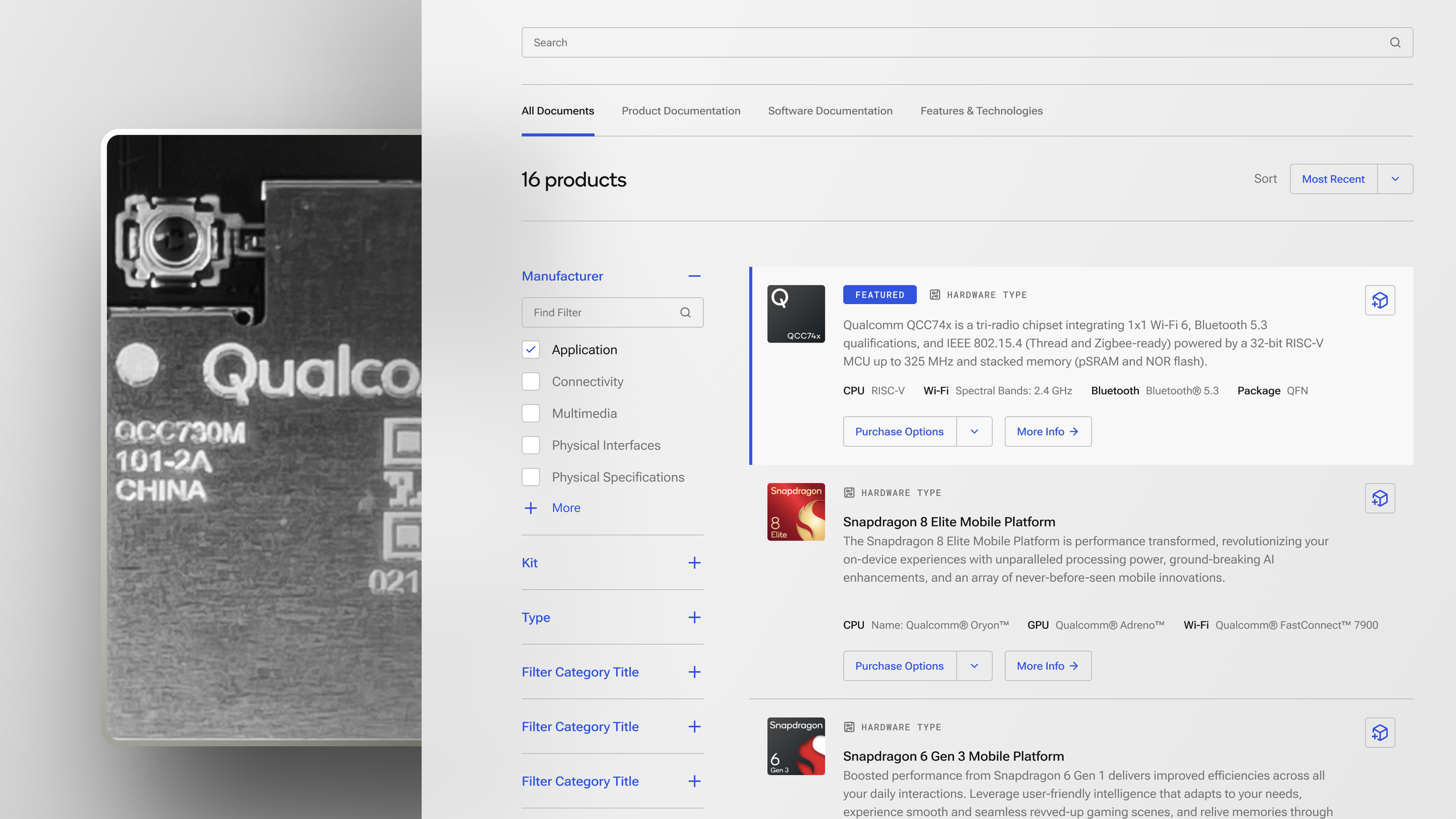
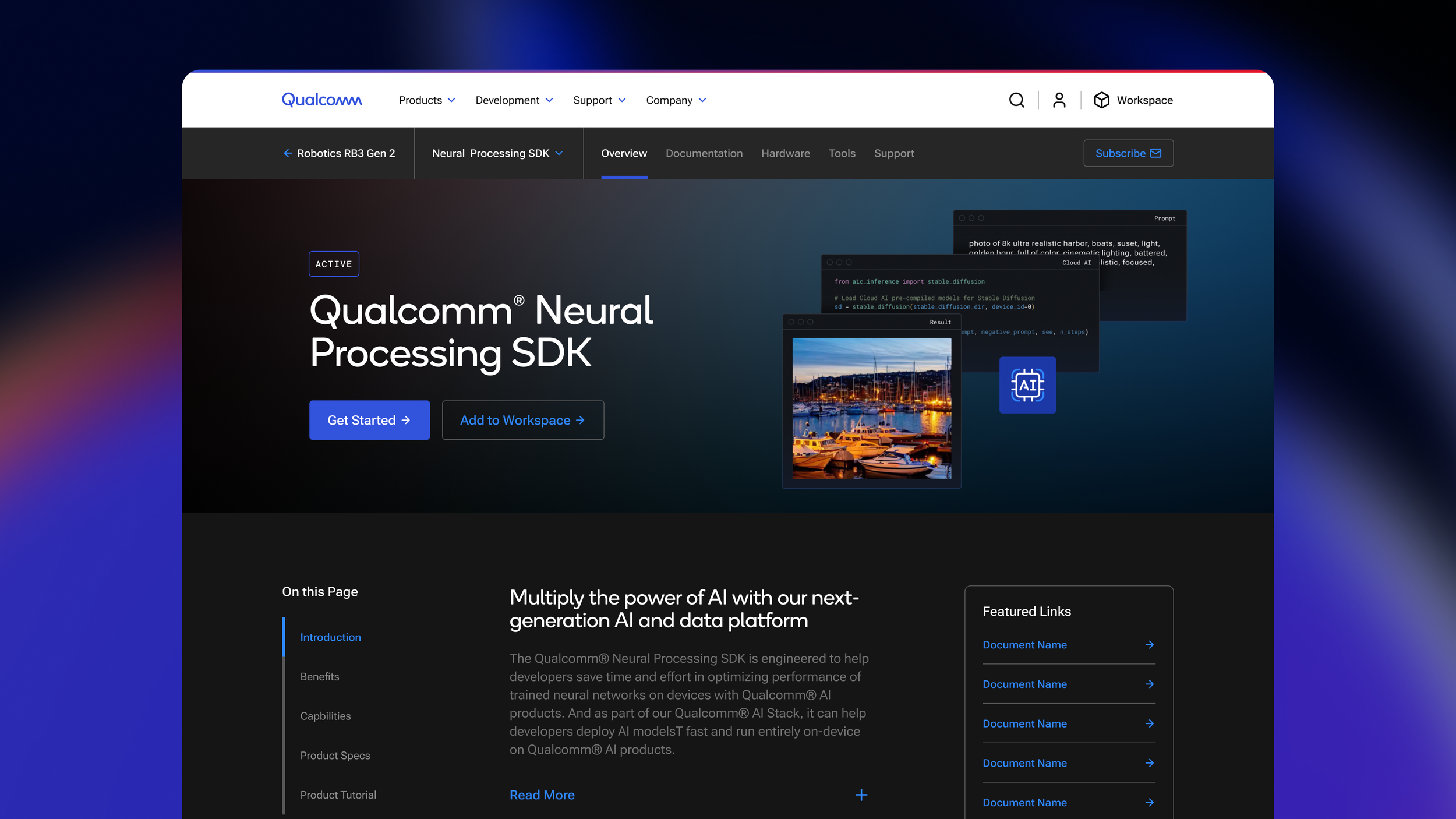
This project focused on rethinking the information architecture, interaction patterns, and visual system of the Qualcomm Developer Site—transforming it from a fragmented content hub into a cohesive, scalable platform that supports both discovery and deep technical learning across devices and use cases.
A key challenge was translating a single UX wireframe into multiple real-world scenarios—requiring components and modules to adapt across mobile and desktop, light and dark modes, and varying levels of content density without compromising consistency or usability.
My focus was less on designing individual screens and more on ensuring that a complex UX vision could be executed consistently across platforms, modes, and a growing design team.
Visit the Qualcomm Developer Site
www.qualcomm.com/developer
Role
As the lead designer, I led the creation of a holistic visual system for the Qualcomm Developer Site, defining a new visual language and product UI framework designed to scale across Qualcomm’s broader ecosystem.
The focus was not only on visual refinement, but on building a system that could support multiple technologies, platforms, and future growth — balancing brand consistency with the flexibility required for a complex, developer-focused product.
Led the translation of UX wireframes into a scalable visual and component system
Defined core components and modules across mobile & desktop, including light and dark modes
Partnered closely with the Design Director to align system decisions with UX intent
Distributed component and module work across designers and provided iterative feedback to maintain system integrity
Collaboration & System Stewardship
Broke down the system into assignable components and module tasks
Reviewed designers’ work to ensure adherence to system rules
Provided feedback not just on visuals, but on reusability and edge cases




Credits
Code and Theory
Kelsie Spilman
Elise Sokolowski
Alex Chen
Scott Lindenbaum
Elizabeth Austin
Sean Lurie
Juan Luciano
Shanna Fishzhang
Jon Novick
Derrick Forrest
Katya Scocimara
Grace Zec
Karen Campos
Karthik Naini
Qualcomm
Carmen True
Ana Schaefer
Bryan Simon
Tyler Molhook
Jorge Hernandez
Steve McLeod
Ryan Kessler